How LoRA Actually Works: Low-Rank Decomposition, Weight Merging, and Memory Breakdown Under the HoodIf you try to full-parameter fine-tune an 8-billion parameter language model in 16-bit precision, your GPU memory requirement immediately explodes past 80 GB.The raw model weights only occupy 16 GB of VRAM ($8 \times 10^9 \text{ parameters} \times 2 \text{ bytes}$). Yet standard training crashes on a single 80 GB A100 or H100.Where does the missing 64+ GB of VRAM go? And why can Low-Rank Adaptation (LoRA) reduce that memory footprint by over 70% while updating fewer than 0.1% of the parameters and retaining 99% of full fine-tuning performance?Here is what actually happens mathematically, mechanically, and in physical GPU memory during LoRA fine-tuning and inference. 1. The Real Memory Culprit: Why Full Fine-Tuning ExplodesWhen training a neural network with the standard AdamW optimizer, model weights are only a tiny fraction of your memory consumption.For every single trainable parameter...
Related
i prossimi due incontri alla biblioteca pagliarani: g. garrapa 12 nov., e. davoglio 13 nov. Gli incontri programmati dal...
i prossimi due incontri alla biblioteca pagliarani: g. garrapa 12 nov., e. davoglio 13 nov. Gli incontri programmati dalla Biblioteca Elio Pagliarani nel mese di novembre 2026:inco...
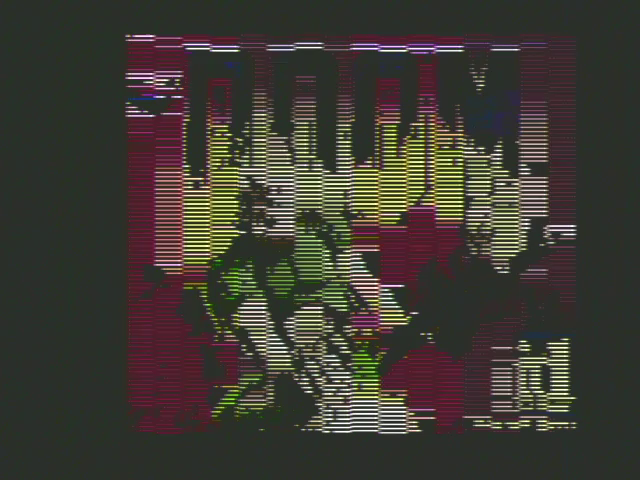
Doom for #Atari2600 console with UnoCart or PlusCart https://forums.atariage.com/topic/394341-doom-port-for-atari-2600-f...
Doom for #Atari2600 console with UnoCart or PlusCart https://forums.atariage.com/topic/394341-doom-port-for-atari-2600-for-pluscartunocart-ai-assisted/ #AI #atari #doom
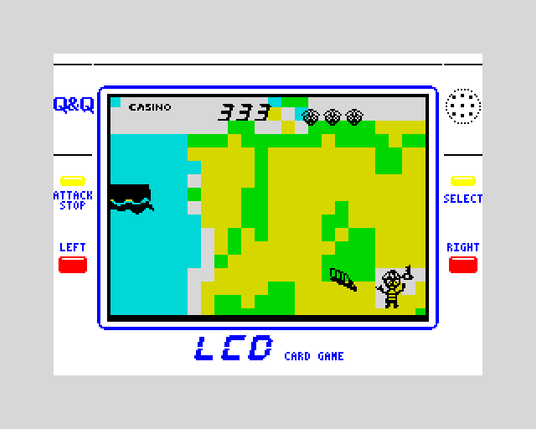
Treasure Island (2026) by FlunkyRetro for ZX Spectrum. An LCD handheld reborn: carry the key to the hut, then the chest ...
Treasure Island (2026) by FlunkyRetro for ZX Spectrum. An LCD handheld reborn: carry the key to the hut, then the chest to the ship, while a bird tries to steal it. At 500 points y...