Four researchers built a tool to test the citations in a large number of scholarly articles. In this article, they used it to show how many fabricated citations they found in a random sample of 500,000 peer-reviewed articles. https://www.pnas.org/doi/10.1073/pnas.2623869123I'm interested in the frequency of fake citations. But right now I'm more interested in the fact that the tool is not #OpenSource. One good reason is that it depends in part on #Claude. But the authors did not share their Claude prompts or any of the non-Claude code they developed to supplement Claude.They do make three gestures toward openness here though. (1) They wrote analysis code to help crunch their data, and they're willing to share that analysis code on request. (2) They offer to share the tool code with reviewers and editors on request, presumably to aid in the peer-review of their article. But they don't make the same offer to researchers who want to test the tool or use the tool for new studies. (3) In Ap...
Related
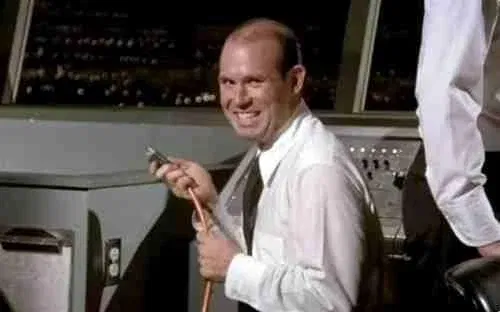
Microsoft down yesterday - all US flights down todayLet's reboot the good stuff and leave the AI shit off #AI
Microsoft down yesterday - all US flights down todayLet's reboot the good stuff and leave the AI shit off #AI
Let me get this straight...Our Skynet is down, but it has nothing to do with #AI?Got it.
Let me get this straight...Our Skynet is down, but it has nothing to do with #AI?Got it.
『検索システム』『推薦システム』とLLM時代の検索推薦 - ジョイジョイジョイ https://joisino.hatenablog.com/entry/searchrecbook
『検索システム』『推薦システム』とLLM時代の検索推薦 - ジョイジョイジョイ https://joisino.hatenablog.com/entry/searchrecbook