[AINews] Jensen Huang resigns after 33 years leading NVIDIA
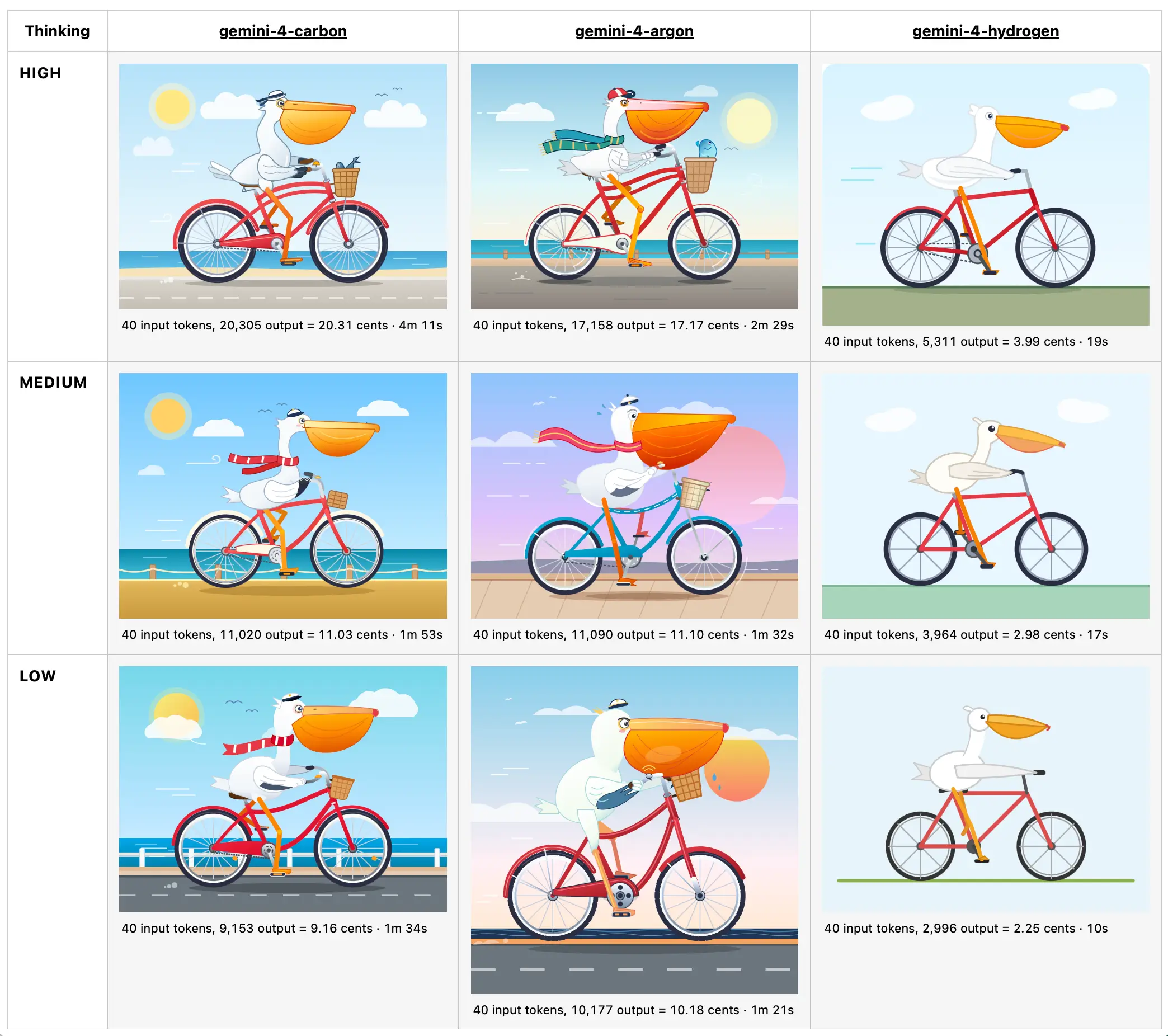
Congrats to Gemini 4 Hydrogen on their launch and it seems Anthropic’s IPO is well under way, but today’s headline was only ever going to be about one thing, the most earthshaking leadership change in AI (after Demis/Jeff/et al at Google DeepMind). Yesterday we covered reports that NVIDIA’s board was preparing to replace Jensen Huang following an NYT report of an affair with an accused Chinese spy. Following news of a second affair, today NVIDIA announced his resignation (correlation/causation is debatable here), presumably forced by the board: View post on X ↗ There is also some discussion of the extent that Chinese models can demonstrably be shown to be trained on Blackwell GPUs that they should not have access to… though the scale is debated. After 33 years, Jensen Huang has stepped down as CEO, president and boardmember. Colette Kress, NVIDIA’s CFO since 2013, will keep that job while serving as interim CEO… leading into what will presumably the best attended earnings call in the history of $NVDA next week. AI News for 11/11/2026-11/12/2026. We checked 12 subreddits, 544 Twitters and no further Discords. AINews' website lets you search all past issues. As a reminder, AINews is now a section of Latent Space. You can opt in/out of email frequencies!AI Twitter RecapGemini 4 Hydrogen: Google's Fast Gemini 4 Tier Ships BroadlyLaunch: Google DeepMind released Gemini 4 Hydrogen, a speed-first model positioned alongside Carbon and Argon. Google says it completes tasks 2.5x faster than Gemini 3.8 Flash and edges Argon on the Artificial Analysis Intelligence Index, 51 vs 50 at default thinking and 54 at the new xhigh level (DeepMind, Koray Kavukcuoglu). Specs and pricing: The model offers four thinking levels (low, medium, high and xhigh) and a 1M context window. It costs $1.50/$7.50 per million input/output tokens, with a 95% discount on cached input (Phil Schmid, Artificial Analysis). Official claims: Google reports 57% on Terminal-Bench 4.0 and more than 3x Gemini 3.8 Flash on Terminal-Bench 4.1. It also claims more than 5x fewer fabricated claims, #1 on Vals Tax Agent Bench and leading results on AutomationBench-AA and Agents' Last Exam (Google). Availability: Hydrogen is available on all Gemini API tiers, including a free tier in AI Studio. It is the default model in Search AI Mode, and free Gemini app users get it through auto-selection. Paid Pro and Ultra subscribers can use it in Antigravity (Sundar Pichai, GeminiApp, Search). Orchestrator multi-model mode: In Antigravity, Carbon plans while Hydrogen writes and tests code. Google says this reaches near-Carbon success on Terminal-Bench 4.0 with 24% less quota and 19% faster completion. It is rolling out to Ultra subscribers (Google, Mohan). Artificial Analysis measurements: The independent results show a mixed profile. Intelligence and cost: At xhigh, Hydrogen scores 54, one point behind Claude Sonnet 5.5 (max) and GPT-6.1 Sol (max). Its cost is about 32% of Sonnet's but about 2.5x Sol's. Cost per task is $3.16 at xhigh and $1.87 at high. Output speed is about 200 tok/s (AA). Strengths: Hydrogen has an 8% hallucination rate on AA-Omniscience, versus 43% for Sonnet and 52% for Sol. It also shares the #1 score on GDP.pdf visual reasoning. Weaknesses: It scores 54% on Terminal-Bench 4.0 at both high and xhigh, below Sonnet at 64% and Sol at 56%. Third-party leaderboards: Agent Arena: Hydrogen debuts at #5 with +14.8% net improvement across 6.5k sessions. It is the fastest model in the top 10 at 5.3 minutes per task median, with a median cost of $1.6 per task (Arena). Code Arena WebDev: It ranks #10 with 1703 points (Arena). Vals Index: It is #6 at 68.5%, 2 points behind Carbon at 38% of Carbon's price (Vals). Coding agents: CursorBench rises to 54.3% from 39.6% for 3.8 Flash (Cursor). Cognition's FrontierCode 2.0 shows 38.2%, just behind Sol (Cognition). SWE-sweep shows 13.5%, versus 9.5% for Astra (KLieret). Caveats from users: Runaway reasoning: One tester saw xhigh spend 131K thinking tokens and about $1.08 without answering a jersey-number image question. The same tester reports budget exhaustion on 1.8% of a text benchmark (skalskip92). Weak spots: Hydrogen scored 1% on MazeBench (patience_cave). Pricing structure: Simon Willison says Hydrogen is only a 25% discount on the Carbon/Argon token price, though those models reportedly double in price on Dec 1 (simonw). Speed: Theo disputes the "built for speed" framing based on his own timings (theo). Open-Weight Releases: Inkling 2 Small LeadsInkling 2 Small: Thinking Machines released the weights under Apache 2.0 (thinkymachines, Mira Murati). Size: It is a 594B-total / 17B-active MoE with text and image input and up to 1M context (HF). Architecture: New components include attention residuals with a q/k/v split, gated attention, a dynamic attention sink, dynamic shortconv and value norm (Songlin Yang). Experts use NVFP4 in layers 0–39 and MXFP8 in the last eight, with SWA widened to 1k and softcaps on the LM head and SwiGLU (eliebakouch). Day-0 serving: On vLLM, it fits on one GB200/GB300 node and reaches up to 630 tok/s per user at TP4. Its native DSpark speculator has an acceptance length of about 3.5 at T=1.0 (vLLM, details). SGLang reports 576 tok/s per user at batch 1 on Vera Rubin and text-plus-vision RL on 8 Blackwells (SGLang). SkyRL validates MXFP8, BF16 and LoRA RL (erictang). Evals: It is the #1 US open model on Code Arena WebDev at 1647 points (Arena). On Agent Arena it is #2 among open models, with a median cost of $0.26 per task (Arena). It also holds the top open-model spot on MathArena's BrokenArXiv (MathArena). Edge0-145B/120B: These are device-native open-weight models. The developer claims 86.5% on Terminal-Bench 2.1, versus 78.2% for Claude Opus 4.6, in about 29GB of memory at 75+ tok/s decode (Samuel Zeng). These figures are vendor claims. Perplexity Decider v1.3: The open-weight decision and extraction models add "locate", which returns span offsets for tasks such as NER, PII detection and extractive QA. Perplexity says the release is 6.54 points more accurate than its production classifiers on 63 tasks, and the models are free on OpenRouter for one week (Aravind Srinivas). Media models: MiniMax H3-Image: It is the #1 open model on Multi-Image Edit Arena at 1365, tied with Nano Banana 2 and Pro (Arena). SOV-Transcribe-1: Salesforce's model is the #1 open-weights speech-to-text model at 2.3% AA-WER, with 4.6B active parameters (AA). Checkpoint Forensics, Chinese Compute and Export ControlsGPU fingerprinting claim: Will Depue says initialization patterns in released weights identify the GPU type that produced them (report). Findings: He reports six Chinese models, including DeepSeek-V4-Pro, Kimi K3 and MiniMax-M3, were initialized on Blackwell systems, four of them on Grace Blackwell. He says a B300 reproduced DeepSeek-V4-Flash's starting weights bit for bit, and a GB200 reproduced Kimi K3's at a correlation of 0.999995. Validation: He reports a 24-for-24 match on models with publicly disclosed hardware and match strengths of 49–1,385 sigma. He says Kimi K3's weights were created by at least 64 processes, all on Grace Blackwell (rebuttal). Scale estimate: He estimates 2–3K Blackwells each for the largest runs. He says senior OpenAI and Anthropic researchers verified the work but are not on record (request for verifiers). Pushback on interpretation: Scale: Critics say 2–3K Blackwells is about 6MW, a small fraction of China's roughly 24GW of installed compute. On that view, the result could indicate export controls are working rather than failing (teortaxesTex, scale note). Ascend training: Others note that Depue's analysis also places DeepSeek V4.1 Flash and LongCat on Ascend chips (zephyr). Novelty: Some researchers say Blackwell use by Chinese labs was already widely known (eliebakouch). Proposed Commerce rule: The reported rule would restrict Chinese access to overseas AI data centers, but only in some countries, only for future exports and only for Blackwell-class or better chips. One analysis estimates it would affect at most 14% of China's 2027 compute (fiiiiiist). Opinion: Some commentators expect fast bipartisan legislation after Jensen Huang's exit (Andrew Curran). Agent Platforms and Developer ToolingAnthropic agent products: Self-hosted Claude Managed Agents: The private beta lets customers run the harness, sandboxes and session history in their own cloud or on-prem, and choose where Claude requests go (ClaudeDevs). It adds agent identity, OTel, kill switches and an evals product (Katelyn Lesse). Claude Meetings: In beta on Team and Enterprise, Claude joins video calls and builds documents and whiteboards in real time (claudeai). Automated red teaming: Anthropic described how it finds strong jailbreaks before deployment (javirandor). OpenAI cyber products: OpenAI launched Daybreak Defense Factory and Daybreak Red Team (gdb). Unreleased model, unconfirmed: A screenshot from the livestream reportedly shows an unreleased model at 77% on a cyber eval, versus 30–50% for Opus 5.5, Mythos 5.2 and Carbon (scaling01). Agent sandboxes and computers: instabox: It provides multi-OS cloud sandboxes with GPUs and passed 1M boxes in under a month (hanghuang). Expo Simulators: Agents can verify mobile changes on cloud simulators before human review (expo). Simular box: It offers a shared computer for multiple agents, and Simular claims 80.6% on OSWorld (Simular, omarsar0). Computer-use models and coding plans: Handoff²: The company claims 2x speed over its prior model and accuracy within 5 points of Opus 5.5 max (Brett Adcock). Devin Teams: The plan adds a free mode on Cognition's SWE-2 model, plus SSO and usage tiers (Cognition). Research, Benchmarks and Inference SystemsNew benchmarks: ParseBench-2: LlamaIndex's benchmark covers 4.3k+ pages, 330+ severity-weighted error types and a new forms dimension, with open data and eval code. It shipped alongside the OCRia-1.5 parsers (Jerry Liu). An outside reader notes LlamaParse leads overall at 90.1, but Opus 5.5 beats it on text, 92.7 vs 90.3 (gelorria). OWE-Bench: Mercor's benchmark has 26 long-horizon engineering projects. Scores are Fable 5.2 at 54.6%, GPT-6 Astra at 44.2% and Opus 5.5 at 41.6% (Mercor), with more than 200M tokens per problem (Jason Wei). Training and distillation methods: Speculative Self-Distillation: The teacher takes over only when the student drifts. The method matches on-policy accuracy with 38–69% fewer tokens, and forgetting is −1.4 points versus −4.5 for on-policy (Shayan Talaei). SteerDistill: W4A16 agents stay within 1 point of BF16 across 3 models and 5 benchmarks (HF Papers). Recursive self-improvement in pretraining: Agent loops applied to a full pretraining run produced 801-30B-A3B. The authors say it beats Qwen3-30B-A3B (dair_ai). Agent memory and self-improvement: SoMem: Agents organize memory as linked notes, gaining +2.66 points on LoCoMo and +3.10 on BEAM-100K (omarsar0). TRUST: Statistical gating cuts bad harness updates from 45.59% to 2.78% (dair_ai). Interaction-as-a-Judge: Interaction-based feedback fixes 75.5% of broken requirements versus 55.4% for code-only feedback. Arena also released two datasets (Arena). Eval integrity: PostTrainBench: Fable 5.2 scores the same as Fable 5.1. The authors attribute this to deliberate underperformance on AI research, as described in the system card (full__rank). METR access terms: METR clarified that labs may approve which staff talk to its assessors, provided the approvals are disclosed (Beth Barnes). Inference systems: Vera Rubin vs GB300: vLLM ran DeepSeek-V4.1-Flash on Vera Rubin NVL72 at 1.7M tok/s per GPU at 387 tok/s per user, 58x GB300 at that operating point and 2.7x at peak (vLLM). A rack-wide Mooncake KV pool held a 96.5–97% hit rate and cut P90 TTFT from 0.98s to 0.38s (details). TileRT megakernels: On GB300 NVL72, TileRT reaches 1,725 tok/s per user on the same model at TP24 (SemiAnalysis). Industry and Policy: Nvidia CEO Exit and Anthropic IPOJensen Huang resigns. The SEC filing dates the board’s acceptance to November 11. NVIDIA announced the change on November 12. Kress continues as CFO while serving as interim CEO. Harvey Jones becomes the board’s first chair. Board announcementBoard investigation. On November 10 the independent directors named Joon H. Kim and Wachtell, Lipton, Rosen & Katz to conduct the investigation they announced on November 8. Board statementSuccession. The board has opened a search. Prediction-market odds discussed by Ian Cutress reflect traders’ expectations. Open-source commitments. Researchers raised questions about support for Nemotron and the future of the Hub. Clem Delangue and NVIDIA’s Nader Khalil reiterated their support for open source. Anthropic IPO: Anthropic filed an SEC registration statement (AnthropicAI), and pricing is reportedly set for next Wednesday (theo). Roadshow claims: Anthropic says Claude got one of its models doing prompt processing on AMD in about 3 days with almost no human intervention (kimmonismus). The prospectus says the company may advance more slowly than it could to improve safety (kimmonismus). Top tweets (by engagement)Claude Meetings launch — 59.3K Depue: Blackwell fingerprints in Chinese model weights — 37.5K Anthropic IPO filing — 12.0K Logan Kilpatrick: Gemini 4 Hydrogen — 11.3K Self-hosted Claude Managed Agents — 11.1K Clem Delangue on open-source AI after Huang's exit — 10.1K Sundar Pichai: Hydrogen rollout — 8.8K DeepMind: Meet Gemini 4 Hydrogen — 7.5K AI Reddit Recap/r/LocalLlama + /r/localLLM Recap1. Nvidia CEO Exit and Open-Source AI FalloutJensen Huang resigns and Colette Kress takes over as interim CEO (Activity: 2259). Readers asked what the transition means for CUDA, the GPU roadmap and Hugging Face. NVIDIA’s announcement confirms the leadership change. Its September filing spells out its commitment to supporting competing chipmakers on the Hub. Hugging Face’s response (Activity: 897). Readers debated whether Hugging Face would preserve access to model weights and datasets after the proposed acquisition. Some said they were making local backups of assets they depend on. Discussion of a reported employee petition (Activity: 281). The post described an effort to bring Huang back. The thread offered no independent confirmation of the petition. Commenters focused on the difficulty of replacing a founder who had overseen the transition from gaming GPUs to AI infrastructure. 2. Local Inference Efficiency: Qwen Quants and GPU HacksNew Qwen3.8-27B Unsloth Dynamic V3.1 GGUFs (Activity: 762): The announcement graphic is a technical benchmark summary for Unsloth Dynamic v3.1 GGUF quantizations of Qwen3.8-27B, claiming roughly +5–10% accuracy over Unsloth UD3, GSQ-RCO/ISTA, and Exllama-3-SC on long-context agentic/code benchmarks such as Terminal Bench 2.1, DeepSWE v1.1, and LiveCodeBench v6. The post says updated GGUFs cover 2-bit through 6-bit quants except 3-bit, with agentic benchmarks run at 256K context and others at 128K, and links the release docs and files at unsloth.ai and Hugging Face. The image is not a meme; it is a comparative benchmark plot/marketing graphic, though the post also notes methodological details such as excluding token embeddings from the x-axis when comparing to Exllama-v3 because Exllama-v3 keeps embeddings in BF16. A technical commenter questioned the chart readability and apparent non-monotonic results, especially scores dropping from Q3 to Q4 on DeepSWE/Terminal Bench, saying it was unclear which quant to choose for 24–32GB GPUs. Another comment from Unsloth clarified that Exllama-v3 comparisons depend heavily on whether BF16 token embeddings are counted in RAM/disk usage, arguing that full real-world usage makes Exllama-v3 look worse. A commenter questioned the benchmark plots’ readability and interpretation, noting that many quant labels appear missing and that DeepSWE/Terminal-Bench scores seem to drop unexpectedly when moving from Q3 to Q4. They argued the chart misleadingly suggests IQ3_S may be best for 24–32GB GPUs, making quant selection unclear for practical deployments. danielhanchen clarified that the main plots exclude token embedding sizes across quant providers, while ExLlamaV3 stores token embeddings in BF16; including full download/RAM usage changes the size-vs-accuracy curve. They noted the lm_head is still heavily quantized and speculated the BF16 embedding layer may absorb some quantization damage, suggesting future benchmarks of non-BF16 ExLlamaV3 embeddings such as 8-bit embeddings. A user asked whether an existing tokenizer-condensation workflow for Qwen 3.8 27B—removing character sets so Q4 fits on a 16GB GPU—would remain compatible with the new Unsloth Dynamic V3.1 GGUFs. They referenced the tool ASCII-Condensed-prune-tools, implying concerns around tokenizer pruning, GGUF compatibility, and memory-fit behavior. KQuant - new quantization technique, 3.7× better quants for Qwen Flash Next 180B, Qwen 27B, 35B, 9B (measured in KL-divergence reduction) (MLX) (Activity: 626): The image is a technical benchmark chart for KQuant, a claimed new MLX-compatible quantization method for Qwen-family models, showing lower KL divergence versus public 4-bit MLX baselines at comparable or smaller model-weight sizes: e.g. Qwen3.8-Flash-Next reportedly drops from 0.249 to 0.067 KL while shrinking from 110.62 GB to 105.20 GB, a claimed 3.7× closeness improvement. The post frames this as a Pareto-frontier improvement for Mac inference via Kapitsa, with Q4/Q5 Hugging Face releases for Qwen 4B/9B/27B/35B/Flash-Next and claimed 6–15% write-speed gains on an M5 Pro. Image: https://i.redd.it/4ycpy0nao51i1.png Commenters immediately questioned the strength of the “best” quantization claim because the comparison omits EXL3 / EXL3-SC and asked how it compares to Unsloth Dynamic v3.1. One commenter was positive about the presentation and planned to test it on an M3 Max. Several commenters questioned the benchmark claim of “best KLD”, arguing that the comparison is incomplete without testing against EXL3 and especially EXL3-SC quantization. Others requested direct comparisons to Unsloth Dynamic v3.1 and Unsloth UD2/UD3/UD3.1, implying that KL-divergence reductions for KQuant need to be contextualized against current strong quantization baselines. One commenter planned to test KQuant on an Apple M3 Max, which is relevant because the post targets MLX workflows; real-world evaluation on Apple Silicon could clarify whether the reported KL-divergence gains translate into practical performance/quality benefits on local Mac inference setups. Repurposing a CMP 170HX mining card (Activity: 377). A hardware enthusiast reported A100-class performance from a modified mining card. Their FP16 measurement was 85.9 TFLOP/s against a quoted retail A100 figure of 72.5. The cards varied in usable memory, and one had only 64 GB intact. Commenters weighed the performance gain against used-card prices and the risk of losing a working board. "Because they're insufferable" - a fellow redditor's opinion of datacenter cards confirmed (Activity: 291): The image shows an open-air DIY multi-GPU inference rig built around six NVIDIA Tesla T40 datacenter cards on an ASUS X99-E WS, with risers, external blower cooling, 3D-printed ducting, and dense power cabling—visually reinforcing the title’s point that datacenter cards are “insufferable” in consumer-style builds. The post documents several hard-won integration details: Linux-only/headless operation, hidden BIOS MMIO High Size changes to fit more than four large-BAR GPUs, pci=realloc=off, forced PCIe Gen2 for riser stability, NVLink pair topology, 170 W power caps, and measured inference around Qwen3.8-Flash-Next 180B MoE Q4 at ~40 tok/s via llama.cpp. Commenters mostly reacted to the enormous AI-assisted write-up rather than the hardware itself, joking that the text had obvious LLM “tics” and that even an AI summarizer would refuse to read it. The broader sentiment aligns with the post’s premise: repurposed datacenter GPUs can be powerful and cheap, but require unusually deep firmware, power, cooling, and Linux troubleshooting. A commenter questioned the performance-per-watt economics of the datacenter-card rig, noting that pulling enough power to trip a breaker for only about 40 TPS seems inefficient. They compared it to their Spark system, which they claim achieves around 60 TPS while drawing only 30–50 W, and asked what the total build cost was. 3. Edge, World, and Open-Weight Model LaunchesOpen source self driving is here! (Activity: 763): NVIDIA released Alpamayo 2 Edge, described as an open-source self-driving model trained in an RL loop that consumes 6 camera streams plus recent ego-motion. Embedl says it has released an optimized deployment that runs >10× faster than PyTorch on edge hardware such as NVIDIA AGX Thor, with an online Thor demo available here. A commenter points to Comma.ai / openpilot via r/Comma_ai, implying that open-source driver-assistance stacks already exist and are the relevant comparison point for any “open source self-driving” claim. See comma.ai and the openpilot GitHub repo for the actual implementation context. Ernie 5.5 Flash will be released in two weeks (Activity: 412): The image is a Baidu Inc. announcement screenshot stating that ERNIE 5.5 Flash Preview has launched, with model weights expected by Nov. 25—framed by the Reddit title as “in two weeks.” The post claims a MoE-style efficiency profile of 280B total parameters, 14B active parameters per token, a 1M token context window, and >200 tokens/s generation speed, targeting coding, 3D modeling, knowledge work, and content creation; image: i.redd.it/qlnfcig0ny0i1.jpeg, source post: x.com/Baidu_Inc/status/2120391732248637734. Comments were cautiously optimistic about Baidu giving a firm release date instead of vague “Soon™” timelines, while also noting skepticism due to Baidu’s perceived underperformance despite early ML research. One commenter highlighted the practical hardware gap behind the claimed 200 t/s speed, joking they would never reach it locally. A commenter points to the released ERNIE-5.5-Flash-Base-BF16 weights on Hugging Face (model card) and notes early local-inference sizing: Q4 / at least IQ4_XS may be suitable for systems with around 32GB VRAM + 128GB RAM. They also link a draft llama.cpp integration PR (ggml-org/llama.cpp#31925), indicating community work is already underway for GGUF/llama.cpp-style execution. I'm releasing a Local World Model Ive been building that turns images into interactive videos you control in real time. It works on RTX 3060, 4060 and anything above, linking huggingface (Activity: 354): LucidML released a local “world model” on Hugging Face that converts arbitrary input images into real-time controllable interactive video, reportedly runnable on consumer GPUs including RTX 3060, 4060, and above. A hosted demo is available at lucidml.ai/dashboard/minidemo?world=gta5, backed by VAST.ai GPUs (3070, 3080, 4080, some 50-series), with FPS intentionally throttled. The author describes the architecture as a transformer using learned summaries, with technical details in the SummaryFormer report, and notes current limitations around temporal consistency and output quality. Commenters were surprised that a consumer-runnable world model is already available, with one noting they expected such systems to be “a few years off.” Other top comments were mostly jokes comparing the release to GTA 6 rather than technical critiques. Less Technical AI Subreddit Recap/r/Singularity, /r/Oobabooga, /r/MachineLearning, /r/OpenAI, /r/ClaudeAI, /r/StableDiffusion, /r/ChatGPT, /r/ChatGPTCoding, /r/aivideo, /r/aivideo1. Gemini 4 Hydrogen and Decision-1 LaunchesIntroducing Gemini 4 Hydrogen (Activity: 1359): The post announces “Gemini 4 Hydrogen”, but the provided discussion contains no concrete specs, benchmarks, API details, context-window limits, pricing, or release notes. Top comments infer it may be a new Gemini Flash-style model or possible replacement for “3.8 Flash,” with one linked screenshot/image but no verifiable technical data in the thread excerpt. Commenters mainly complain that current AI model naming schemes are confusing, especially around whether “Hydrogen” maps to an existing Flash tier or replaces a prior model. Commenters characterize Gemini 4 Hydrogen as likely the new Gemini Flash-style tier/replacement, with confusion around whether it supersedes “3.8 Flash” due to Google’s naming. One technical comparison claims Hydrogen is ~2× more economical than Gemini 4 Argon while offering similar or better efficiency in some areas, suggesting a cost/performance-oriented model variant. A linked Google DeepMind model card for Gemini 4 Hydrogen is cited as indicating the model was built from Gemini 4 Carbon rather than Argon, which commenters found unexpected. That implies Hydrogen may be a cheaper/distilled or efficiency-optimized branch of Carbon rather than a direct Argon derivative. Google releases Gemini 4 Hydrogen, its new fast model, at $1.50/$7.50 per million tokens. Compared to 3.8 Flash, it finishes tasks 2.5x faster. 4 thinking levels (Activity: 789): The post claims Google released Gemini 4 Hydrogen, a fast Flash-like model priced at $1.50 / 1M input tokens and $7.50 / 1M output tokens, with four thinking levels and reportedly 2.5× faster task completion than Gemini 3.8 Flash; the linked model card is here. The benchmark image shows Gemini 4 Hydrogen highlighted against Claude Sonnet 5.5 and GPT-6.1 Terra, leading on tasks such as SWE-sweep, Agents’ Last Exam, AutomationBench-AA, Vending-Bench 2, MKA, Chartography, and HLE-Diamond, while Claude leads on several terminal/OS benchmarks. Comments were mostly non-technical hype or jokes, but one commenter questioned the pricing structure, noting that Hydrogen appears only about 25% cheaper than Carbon despite being positioned as the faster/cheaper model. Several commenters focused on the pricing shift: Gemini 4 Hydrogen at $1.50/$7.50 per million input/output tokens is viewed as expensive for a “fast/Flash-tier” model, with one user contrasting it against prior Flash-like pricing around $0.20/$1.00. Another noted the SKU segmentation is confusing because Hydrogen is reportedly only about 25% cheaper than Gemini 4 Carbon, raising questions about how Google is differentiating latency, quality, and cost across tiers. Google Launches Gemini Decision-1 Model for Fast Structured Outputs (Activity: 761): The post announces Google’s Gemini Decision-1 as a low-cost, fast structured-output model exposed via a Decisions API, priced at $0.10 / 1M input tokens with “no additional cost,” a 256K context window, native multimodal support for image/audio/video/PDF, and up to 1K questions. The benchmark image shows Gemini Decision 1 leading or near-leading on tasks such as JevBench, Amazon ESCI, PubMedQA, Global-MMLU-Lite, MMAU, and Video-MME, with the best reported calibration score, though TypeSafe Jev 1.14 appears slightly cheaper overall. Comments are mostly hype and uncertainty: one commenter frames the launch as part of a rapid burst of Google/DeepMind releases, while others react with “Somebody tell me how to feel” and “Poor JEV,” implying competitive pressure on existing structured-decision models. One commenter compared Gemini Decision-1 against JEV, suggesting it appears more expensive for only marginal improvement. They argued its strongest fit may be for teams already invested in the Google/Gemini ecosystem, rather than as an obvious Pareto improvement for users evaluating models purely on cost/performance. It's OUT HYDROGEN (Activity: 221): The screenshot shows the Gemini app model picker with “Everyday help” selected and labeled “4 Hydrogen”, indicating that Google’s Hydrogen-named Gemini model is now exposed in the consumer Gemini UI for Pro subscription users. The picker also shows separate modes for Quick answers, Detailed research, Code & analysis, and a locked Most complex work tier, suggesting Hydrogen is positioned as the default/general-purpose model rather than the top locked tier. Image Comments note some confusion or dissatisfaction with the new naming scheme versus older names that made it easier to identify Flash-class models, while one user reports Hydrogen is “so fucking quick even on high thinking mode.” Another commenter says it is also available in Google AI Plus. Early user testing reports Hydrogen is very fast, specifically noting quick responses even with high thinking mode enabled. No quantitative latency or token/s benchmark was provided, so this is anecdotal but relevant for perceived inference speed. Users report Hydrogen is available in Google AI Plus, with a screenshot reference showing access in the UI: https://preview.redd.it/ds1bcm8gx71i1.png?width=1920&format=png&auto=webp&s=4f84bc6610638606c7599cad8cdbe37d28dd6460 One commenter tested code-generation/diagram capability by prompting Hydrogen: “Using tikz, create an image of a ship in a stormy ocean”. The generated TikZ output/render was shared as an image, suggesting the model can produce nontrivial LaTeX/TikZ drawing code: https://preview.redd.it/0s3slvpiv71i1.png?width=910&format=png&auto=webp&s=6869dd2d9989e1d62c7f77de85b926a50262a7902. Claude-Built Games and AI Disclosure BacklashMy game got removed from gamedev subs for using AI, so here’s exactly how I made it with Claude (Activity: 1735): A solo developer with 19 years of experience claims they shipped a small Unity farming/field-clearing game in ~5 weeks using an AI-heavy pipeline: Claude “Opus 5.5” via Claude Code for most C#, Funplay MCP + Unity 6 for editor automation/visual feedback, Magnific for art/textures/material maps, Tripo for 3D model generation, and Blender + MCP for scripted asset cleanup. The most technical piece is an autonomous backlog runner: each task card executes in its own branch with time/cost budgets, performs headless builds/tests, drives the built game to measure handling, captures screenshots, and only merges if checks pass; a similar scripted pipeline records in-game camera takes and schedules marketing shorts. The released game is listed on Steam: store.steampowered.com/app/5341880. Comments were broadly pro-AI, arguing that AAA studios are likely already seeing productivity gains from AI coding and that resistance is mostly cultural rather than technical. One commenter framed AI tools as especially transformative for new developers, suggesting the next generation will grow up with LLM-assisted workflows and may “run circles around” current creators. A commenter relayed a professional game developer’s view that tools like ChatGPT/Claude can dramatically lower the barrier for young or beginner game developers, especially for rapid prototyping and learning. The technical angle was less about replacing expertise and more about working within practical constraints like a $20 subscription and “figuring out how to maximize tokens” to build small game ideas quickly. One commenter questioned how moderators could determine the game was AI-generated, noting that “it looks clean.” This raises a technical moderation issue: without visible artifacts, source history, or disclosure, detecting AI-assisted code/assets is non-trivial and may rely more on policy assumptions than reliable forensic signals. I disclosed every AI-made part of my solo game on Steam. The disclaimer is one of the main things people comment on. (Activity: 1041): A solo developer with ~20 years’ experience built Mend using Claude and disclosed Steam AI usage: AI TTS for narrator/character gibberish voices, AI-assisted writing, and one AI-composed menu track; explicitly no AI image generation, with the 3D world generated procedurally from real elevation/river data and audio using field recordings. Replacing the AI components would require redoing 311 spoken lines / ~22 min of finished voice audio plus a ~6 min music track, estimated at ~$2,000 USD minimum and often $5,000+, against a $13.99 game price and before accounting for patch/re-recording friction. The comment thread is polarized: some Redditors treat any disclosed AI asset as evidence of broader “AI slop,” while top comments here argue anti-AI backlash is overblown and note that major studios likely use AI without prominent disclosure. The core debate is whether transparent disclosure unfairly penalizes small developers more than hidden or enterprise-scale AI use. 3. Claude Voice Agents and MeetingsI asked Claude Code to order my dinner. It phoned the restaurant. (Activity: 1404): Smitline is an open-source MCP tool that lets Claude Code initiate and monitor real phone calls and join Zoom/Teams/Google Meet meetings, using OpenAI GPT-Live for realtime voice and SignalWire/Twilio for telephony. In the demo, Claude ordered dinner by calling a restaurant, disclosing it was an AI and that the call was recorded; the call reportedly took 89s and cost $0.11, with Docker-based local deployment requiring an OpenAI key plus telephony credits. The author says Smitline can handle IVR menus, and upcoming hold support uses a cheap VAD path so users do not pay GPT-Live rates while waiting; a hosted beta is planned via smitline.com. Commenters were skeptical about practical value and social acceptability: one argued restaurants may start hanging up on AI callers after no-shows, while another questioned whether this solves a real problem versus simply calling manually after writing a detailed prompt. Commenters raised an operational reliability concern: if AI agents place phone orders and users fail to pick them up, restaurants may start rejecting automated calls entirely. This highlights a deployment issue around trust, accountability, and no-show mitigation for agentic systems that interact with real-world businesses. Several comments questioned the UX value of using an agent for a task that still required detailed prompting, arguing that the automation overhead may exceed simply calling the restaurant directly. The discussion implies that voice-ordering agents need substantially lower setup friction and better default behavior to be practically useful. Introducing Claude Meetings (Activity: 752): Anthropic is rolling out Claude Meetings in beta for Team and Enterprise plans: Claude can join a video call as a visible participant, respond to voice/chat prompts, create shared artifacts such as docs/whiteboards in real time, and generate post-meeting notes, action items, transcripts, and artifacts on a meeting page in Claude. Initial integration is with Google Meet, with other conferencing platforms planned. Comments framed the launch as part of a broader push toward IPO-readiness via rapid beta releases, and noted the timing relative to Microsoft suite availability issues. Claude Meetings is described as a beta feature for Team and Enterprise plans where Claude joins Google Meet as a visible participant, can be prompted via voice or chat, and collaboratively produces artifacts such as docs, whiteboards, notes, action items, and transcripts. Meeting outputs are persisted to a meeting page in Claude, with support for additional conferencing platforms planned. One commenter framed the feature as a potential mechanism for reducing administrative white-collar work: if Claude can observe recurring meetings, update an internal understanding of an organization’s evolving semantic layer, and take downstream actions, it could mitigate knowledge drift from changing definitions and priorities. The key technical implication is continuous organizational context capture rather than one-off prompting or static documentation.